

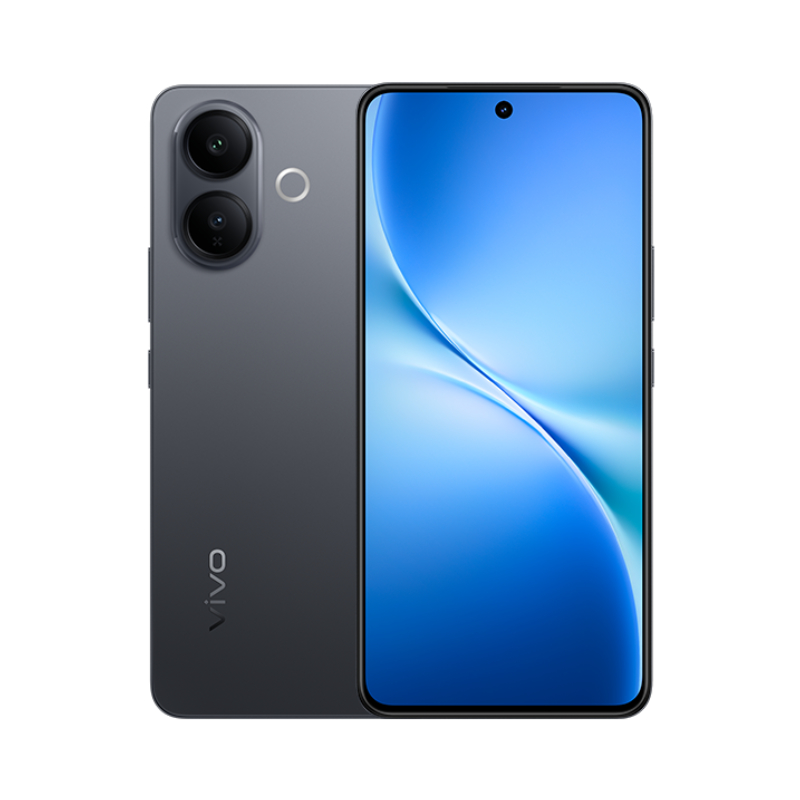
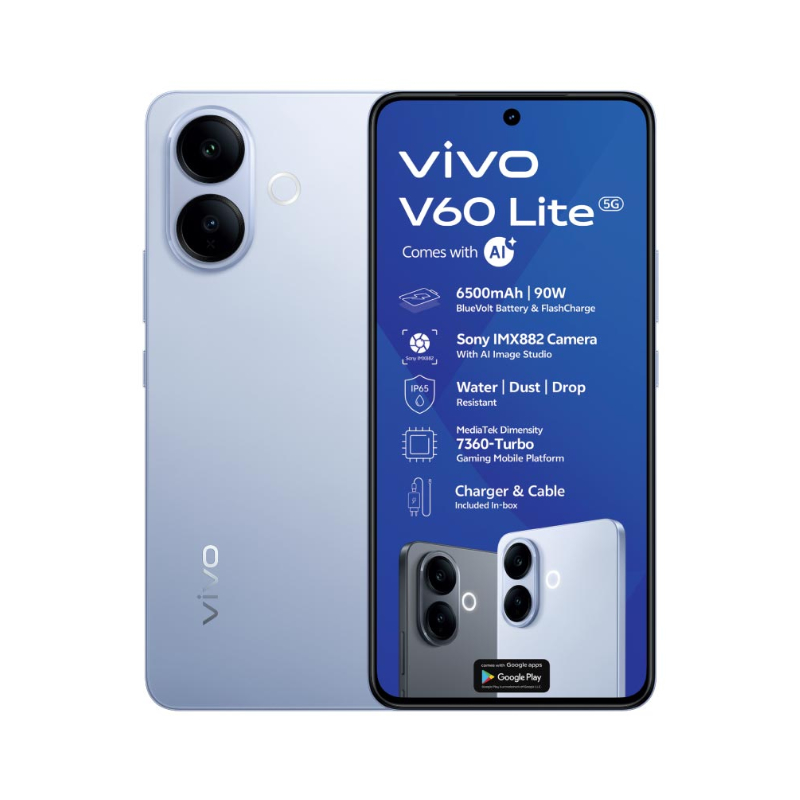
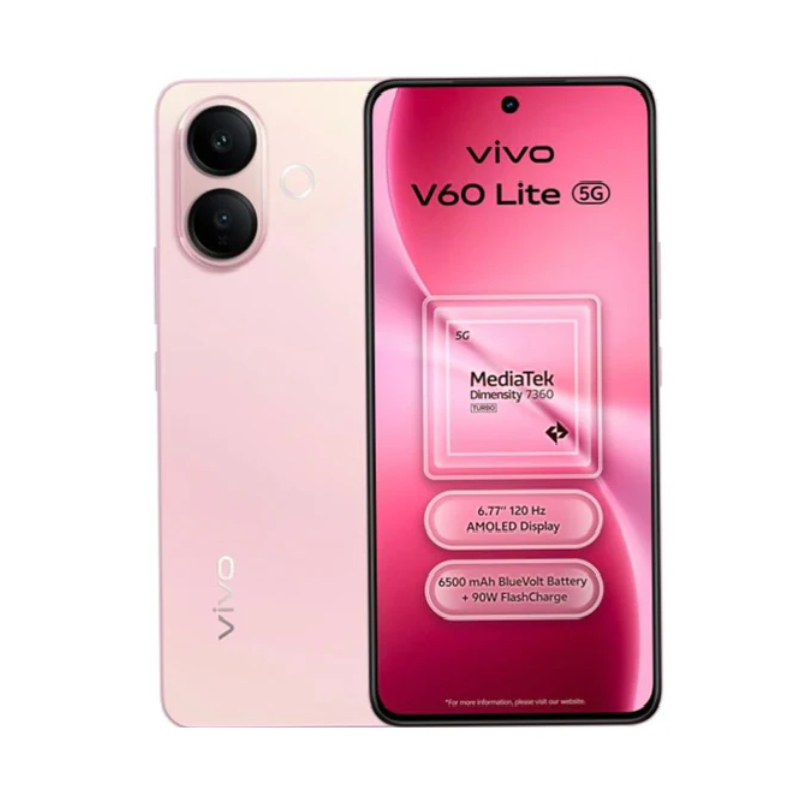
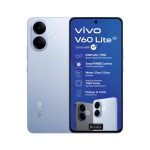
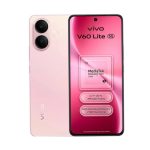
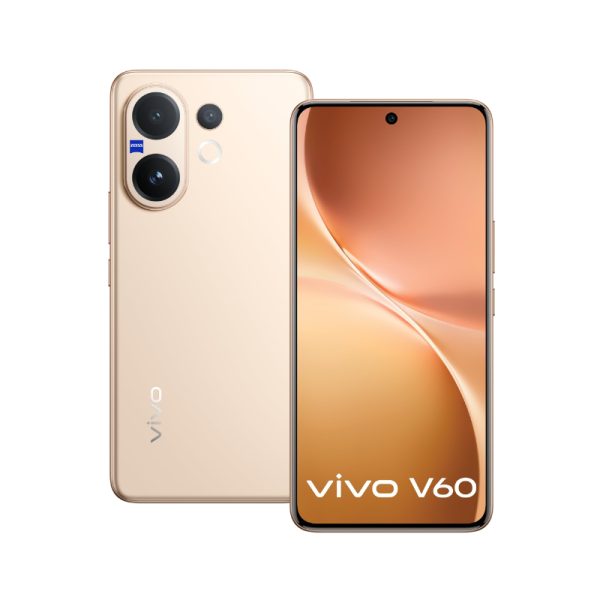
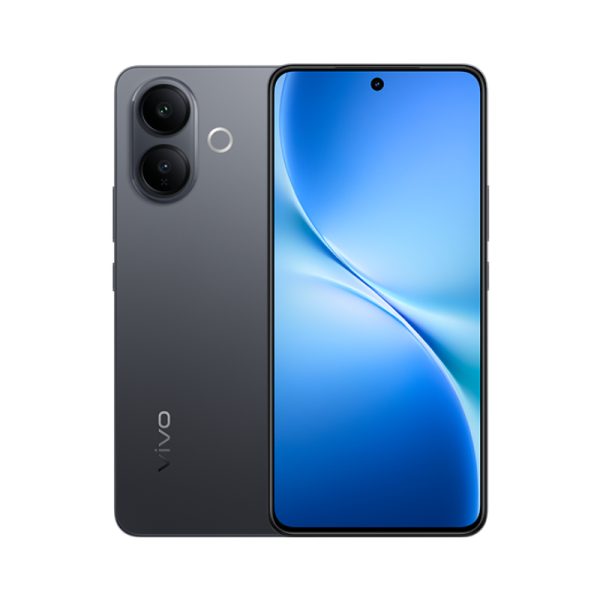
Vivo V60 Lite 5G
KSh 42,999.00
Key Features and Specifications
- RAM: 12GB
- Internal Storage: 256GB
- Display: 6.77-inch AMOLED
- OS: Android 15, Funtouch 15
- Chipset: Mediatek Dimensity 7360 Turbo (4 nm)
- Main Camera: 50MP + 8MP
- Selfie Lens: 32MP
- Connectivity: 5G, Wi-Fi 6, Bluetooth 5.4, GPS, NFC, USB 2.0.
- Battery: 6500mAh, 90W wired
- Colors: Vitality Pink, Titanium Mist Blue, Ocean Night Black
Refined Design and Contemporary Build Quality
The Vivo V60 Lite 5G represents a strategic positioning within Vivo’s product lineup, delivering essential 5G connectivity and core V-series design elements at more accessible price points than flagship V60 models through careful feature optimization and cost-conscious engineering. The overall design language maintains recognizable V-series aesthetics while incorporating practical compromises that enable competitive pricing without sacrificing the contemporary appearance increasingly expected even in mid-range segments. The front fascia features optimized screen-to-body ratio through reduced bezels and efficient component placement, creating immersive viewing experiences while utilizing cost-effective manufacturing techniques rather than expensive curved-edge displays or ultra-narrow bezel implementations requiring advanced assembly precision.
The rear panel design showcases thoughtful aesthetic execution that delivers premium visual appeal through smart material selection and surface treatments rather than exotic materials that would inflate costs beyond target price positioning. Surface finishes may include gradient color treatments creating dynamic appearance under varying lighting conditions, AG (Anti-Glare) matte textures providing sophisticated look while resisting fingerprints and smudges, or glossy finishes with multi-layer coatings creating depth perception. Color options typically span from subtle professional tones suitable for conservative users to vibrant youthful colors targeting the style-conscious younger demographics that comprise core V-series audience. The material selection balances perceived quality with manufacturing efficiency, potentially using high-quality polycarbonate with premium finishing or glass panels in specific variants where market positioning justifies additional material costs.
The camera module design maintains V-series visual identity through distinctive styling that creates immediate brand recognition while housing capable photographic hardware appropriate for segment positioning. The module arrangement may feature geometric layouts that artistically organize camera sensors, flash modules, and decorative elements creating visual interest and premium perception beyond functional requirements. Module styling potentially incorporates contrasting finishes, metallic accents, or dimensional elements that elevate appearance above basic budget implementations. The protrusion is managed through engineering optimization balancing optical requirements with aesthetics, minimizing elevation while accommodating lens assemblies and focusing mechanisms requiring physical depth for proper optical performance.
Frame construction utilizes materials selected for optimal balance between structural integrity, weight management, and cost control, typically featuring reinforced polymer composites or aluminum alloy frames depending on specific variant tier within the Lite positioning. The frame provides essential structural support maintaining device rigidity during handling while incorporating impact distribution features that protect internal components during accidental drops. Button integration demonstrates manufacturing attention to detail with precise tolerances eliminating wobble while providing satisfying tactile feedback confirming activation. The power button may feature textured patterns or contrasting colors for tactile differentiation from volume controls, while button positioning follows ergonomic principles enabling comfortable operation during single-handed use.
Enhanced Display Technology and Visual Performance
The Vivo V60 Lite 5G features display technology that balances visual quality with cost considerations, delivering satisfying viewing experiences for content consumption, gaming, and daily tasks while respecting mid-range price positioning. The screen size likely ranges from 6.5 to 6.7 inches, providing generous viewing area creating immersive experiences for video streaming, social media browsing, gaming, and photography review while maintaining device dimensions suitable for comfortable handling. Resolution specifications likely deliver Full HD+ (2400×1080 or 2412×1080) pixel density providing crisp text rendering, detailed image display, and viewing quality significantly superior to budget HD+ implementations while avoiding the cost premium of QHD+ resolutions offering marginal practical benefits for screen sizes in this range.
AMOLED panel technology delivers visual performance characteristics that distinguish mid-range devices from basic budget offerings, including true black reproduction through complete pixel deactivation, superior contrast ratios creating dramatic visual depth, and vibrant color saturation bringing content to life. The self-emissive nature of AMOLED enables individual pixel brightness control, allowing perfect blacks simultaneously with brilliant highlights creating contrast ratios impossible in backlit LCD displays. Color accuracy achieves reasonable calibration standards for the segment, providing pleasing color reproduction for photography, video, and general content consumption without the extensive factory calibration and wide color gamut coverage reserved for professional-grade implementations. The AMOLED implementation enables always-on display functionality showing time, notifications, and custom graphics while consuming minimal power through selective pixel activation.
Refresh rate specifications likely include 90Hz implementations providing noticeably smoother scrolling and interface animations compared to standard 60Hz displays common in budget segments. The enhanced refresh rate reduces eye strain during extended usage, creates premium interface feel that differentiates the device from basic offerings, and improves gaming experiences in supported titles. The 90Hz refresh represents pragmatic balance between smoothness benefits and cost considerations, delivering meaningful improvements over 60Hz while avoiding the battery consumption and cost increases associated with 120Hz implementations becoming standard in premium segments. Adaptive refresh functionality may intelligently adjust between maximum rates during active interaction and lower rates during static content, optimizing smoothness while conserving battery life.
Brightness capabilities determine practical usability across varying environments, with typical brightness potentially reaching 600-800 nits enabling comfortable viewing in most indoor and moderate outdoor conditions. Peak brightness may exceed these levels briefly when auto-brightness detects strong ambient light, boosting visibility for outdoor usage though potentially not matching the extreme brightness capabilities of flagship devices exceeding 1500 nits. Auto-brightness systems use ambient light sensors to adjust display brightness appropriately, potentially incorporating basic machine learning that adapts to individual user preferences over time. Minimum brightness settings dim displays adequately for comfortable nighttime usage without excessive eye strain or partner disturbance, with smooth brightness transitions preventing jarring level changes.
5G Connectivity and Comprehensive Communication Features
The Vivo V60 Lite 5G incorporates next-generation 5G connectivity as a core differentiator, positioning the device for future network evolution while delivering meaningful speed improvements over 4G LTE in markets with 5G infrastructure deployment. The 5G modem supports sub-6GHz frequency bands providing nationwide coverage potential with speeds typically ranging from 100Mbps to 2Gbps depending on network congestion, carrier implementation, and signal conditions—representing substantial improvements over 4G LTE particularly in congested urban environments where 5G’s improved spectral efficiency delivers better performance. The omission of mmWave support in most Lite variants represents pragmatic cost optimization, as mmWave’s limited coverage area and infrastructure scarcity make it less essential for target markets where sub-6GHz provides primary 5G coverage.
Intelligent network management optimizes connectivity through algorithms monitoring signal strength, bandwidth requirements, battery status, and application needs, seamlessly managing transitions between 5G, 4G LTE, and Wi-Fi for optimal performance and efficiency. Smart 5G features analyze active applications and automatically switch to power-efficient 4G when current activities like messaging or music streaming don’t require 5G speeds, conserving battery life that 5G modems would otherwise consume aggressively. This intelligent management proves essential for maintaining acceptable battery life while providing 5G capabilities, addressing concerns about 5G’s power consumption impact on all-day endurance. Dual SIM functionality with 5G support on primary SIM provides flexibility for users managing multiple numbers, though secondary SIM typically operates on 4G networks representing acceptable compromise in mid-range implementations.
Wi-Fi capabilities support Wi-Fi 5 (802.11ac) or potentially Wi-Fi 6 in higher-positioned Lite variants, providing solid wireless networking performance for home and public hotspot connectivity. Wi-Fi 6 implementation, if present, delivers improved efficiency in congested environments through OFDMA technology that divides channels among multiple devices more efficiently than previous standards. The Wi-Fi system handles typical usage scenarios including HD and 4K video streaming, web browsing, social media, cloud synchronization, and application downloads with adequate performance meeting daily connectivity needs. Automatic network switching between cellular and Wi-Fi maintains seamless connectivity while minimizing cellular data consumption—important consideration for users monitoring data allowances or utilizing metered 5G plans.
Bluetooth connectivity implements version 5.1 or 5.2 providing reliable wireless personal area networking for connecting audio accessories, wearables, and other peripherals increasingly common in smartphone ecosystems. The Bluetooth implementation maintains stable connections for wireless audio streaming with support for standard codecs including SBC and AAC providing acceptable quality for casual listening, potentially including aptX support in some variants for improved audio quality appreciated by users with higher-quality wireless headphones. Connection reliability proves adequate for typical usage including audio playback, phone calls through wireless headsets, fitness tracker synchronization, and smartwatch connectivity.
Location services utilize multi-constellation GNSS support including GPS, GLONASS, Galileo, and BeiDou for accurate positioning across global regions regardless of specific satellite constellation availability. The positioning accuracy typically falls within 5-10 meters under open sky conditions—adequate for navigation, ride-sharing services, location-based applications, and photography geotagging without the centimeter-level precision of dual-frequency implementations in premium devices. Assisted GPS (A-GPS) uses cellular network data to accelerate initial satellite lock, reducing wait times when launching navigation apps from minutes to seconds—essential for practical navigation usability.
Capable Camera System and Practical Photography
The Vivo V60 Lite 5G features camera systems that prioritize practical photographic capabilities and social media optimization appropriate for mid-range positioning, delivering quality imaging for everyday photography without the sophisticated multi-lens arrays and computational photography depth found in flagship implementations. The primary rear camera likely features a sensor ranging from 48MP to 64MP with pixel binning technology combining multiple pixels into larger effective pixels for improved light gathering and image quality. In favorable lighting conditions, the primary camera produces detailed images with pleasing colors, reasonable dynamic range, and exposure handling adequate for social media sharing, casual photography, and daily documentation capturing memories without requiring photography expertise.
Multi-camera configurations provide functional diversity addressing common photographic scenarios, potentially including ultra-wide cameras expanding perspective for landscape and group photography, macro cameras enabling extreme close-up shots revealing details, or depth sensors supporting portrait mode effects. The specific implementation varies by market and variant positioning, with some configurations prioritizing genuine photographic versatility while others may include supplementary sensors primarily supporting computational features. When ultra-wide cameras are included, they typically feature modest specifications compared to primary cameras, providing expanded field-of-view capturing broader scenes than primary lenses accommodate, perfect for architecture, landscapes, and group photos where physical distance limitations prevent capturing entire scenes.
Low-light photography represents challenging scenarios for mid-range camera systems, with the V60 Lite 5G addressing this through software optimization and night mode processing rather than expensive large sensors, optical image stabilization, or dedicated night photography hardware. Night mode functionality captures multiple frames and intelligently merges them computationally to reduce noise, improve brightness, and maintain detail that single exposures would lose to darkness, though results typically show more grain and less dynamic range than flagship implementations with larger sensors and sophisticated processing. Understanding lighting limitations and utilizing available light sources creatively allows users to achieve better results, with the camera system providing adequate capability for capturing usable memories in most common lighting situations.
Video recording capabilities meet content creation and documentation needs with specifications likely including 4K recording at 30fps for high-resolution capture and 1080p at 30fps or 60fps for smooth motion. Video quality proves adequate for vlogging, social media content, and personal documentation, with electronic image stabilization providing basic shakiness reduction during handheld recording. Advanced video features may include time-lapse modes condensing extended periods into brief clips, slow-motion capture at 120fps or 240fps enabling dramatic effect creation, and potentially basic video editing tools integrated into the camera application. Audio recording through built-in microphones captures acceptable sound quality for casual videos, though content creators seeking professional results would benefit from external microphones if supported through USB-C.
Balanced Performance and Gaming Capability
The Vivo V60 Lite 5G is powered by mid-range processor technology selected to balance performance capabilities with power efficiency, thermal characteristics, and cost constraints inherent in Lite positioning. The chipset likely comes from Qualcomm’s Snapdragon 600 or 700 series, MediaTek’s Dimensity 6000 or 7000 series, or equivalent silicon featuring balanced CPU architecture with performance cores handling demanding tasks and efficiency cores managing lighter operations and background processes. Clock speeds typically range from 2.0GHz to 2.6GHz for performance cores, providing adequate processing power for social media applications, web browsing, video streaming, messaging, photography, and moderate gaming that comprises majority usage for target demographics.
RAM configurations provide sufficient memory for typical multitasking scenarios, with options likely ranging from 8GB to 12GB depending on variant positioning within the Lite tier. This memory capacity allows users to maintain multiple active applications simultaneously, switching between messaging apps, social media platforms, web browsers, and media players without excessive reloading that would interrupt workflows and diminish user experience. Virtual RAM expansion features allocate 4GB or more of storage space as supplementary memory extending total available RAM, though at performance levels below physical RAM due to storage speed limitations. Memory management algorithms balance maintaining app states with resource conservation, using learning algorithms to predict which apps users will access and pre-loading them while managing background processes.
Storage specifications provide adequate capacity for applications, photos, videos, and media libraries, with base configurations typically starting at 128GB and extending to 256GB in higher variants. This capacity accommodates essential applications, substantial photo libraries, offline music collections, downloaded video content, and accumulated documents without immediately requiring external storage solutions. Storage technology uses UFS 2.2 or potentially UFS 3.1 providing reasonable read and write speeds for application launches, file transfers, photo burst shooting, and media access—performance representing meaningful improvements over eMMC found in budget devices while managing costs below premium UFS 4.0 implementations. Some regional variants may include microSD expansion allowing aftermarket capacity upgrades for users with extensive media libraries.
| Storage |
12GB/256GB |
|---|
You must be logged in to post a review.
Reviews
Clear filtersThere are no reviews yet.