

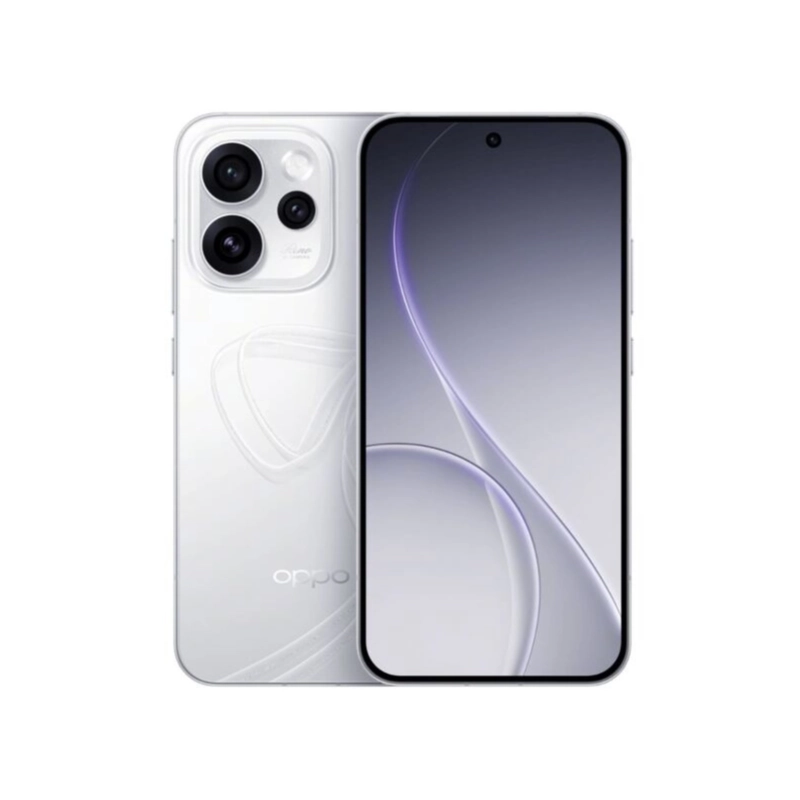
Oppo Reno15 5G
KSh 74,999.00
Key Features and Specifications
- RAM: 12GB
- Internal Storage: 512GB
- Display: 6.32-inch AMOLED
- OS: Android 16, ColorOS 16
- Chipset: Mediatek Dimensity 8450 (4 nm)
- Main Camera: 200MP + 50MP + 50MP
- Selfie Lens: 50MP
- Network: 5G, Wi-Fi 6, Bluetooth 5.4, USB Type-C 2.0
- Battery: 6,200mAh, 80W
- Colourways: Blue, Brown, White
Design Excellence and Premium Construction
The Oppo Reno15 5G embodies cutting-edge smartphone design philosophy that merges aesthetic sophistication with functional engineering, creating a device that appeals to discerning consumers who value both form and function. The overall design language reflects contemporary trends while maintaining distinctive Reno series identity through signature elements that make the device immediately recognizable. The front fascia maximizes screen real estate through ultra-slim bezels and carefully engineered symmetry that creates visual harmony and immersive viewing experiences. The implementation of the front camera, whether through centered punch-hole, corner placement, or under-display technology, demonstrates commitment to minimizing visual interruption while maintaining photographic capability essential for modern smartphone users.
The rear panel design showcases premium finishing techniques that elevate the device beyond commodity status into aspirational territory where smartphones become fashion accessories and personal statements. Surface treatments may include sophisticated gradient finishes that shift colors under different lighting angles, matte textures that resist fingerprints while providing luxurious tactile feedback, or glossy finishes with depth-creating visual effects. The camera module represents a focal design element, with arrangement, shape, and decorative treatments that create distinctive visual identity while housing sophisticated photographic hardware. Materials selection balances aesthetic goals with practical durability, potentially incorporating glass panels with Corning Gorilla Glass protection, ceramic elements for premium variants, or advanced composite materials that deliver flagship appearance at accessible price points.
Frame construction utilizes aerospace-grade aluminum alloys or stainless steel that provides structural rigidity essential for maintaining tight tolerances between components while contributing to premium in-hand feel. The metallic frame may feature polished, brushed, or matte finishes that complement rear panel aesthetics while providing visual accent that delineates device boundaries. Button integration demonstrates manufacturing precision, with power buttons and volume rockers machined to exacting tolerances that eliminate wobble while providing satisfying tactile feedback. Some implementations may include customizable action buttons or pressure-sensitive frame areas that expand input possibilities beyond traditional button presses, enabling shortcuts and contextual actions that enhance productivity.
Ergonomic optimization throughout the Oppo Reno15 5G reflects understanding that smartphones serve as constant companions held, carried, and manipulated throughout daily activities. Dimensional balancing achieves optimal screen size while maintaining comfortable single-handed reach to screen corners and preventing excessive width that would strain thumb extension. Thickness measurements accommodate substantial battery capacity and sophisticated camera optics without creating uncomfortable bulk that prevents comfortable pocketing. Weight distribution engineering places heavier components strategically to achieve neutral balance that prevents top-heavy or bottom-heavy sensations during extended holding periods. Curved edges and contoured transitions eliminate sharp corners that would create pressure points, while texture variations provide grip security that reduces accidental drops.
Display Innovation and Visual Performance
The Oppo Reno15 5G features state-of-the-art display technology that positions visual experience as a primary differentiator and user satisfaction driver in an increasingly competitive smartphone market. The screen diagonal likely ranges from 6.5 to 6.7 inches, providing expansive viewing area that immerses users in content while maintaining device dimensions suitable for comfortable single-handed operation by users with average hand sizes. Resolution specifications deliver QHD+ or Full HD+ pixel densities that render text with razor sharpness, preserve fine details in photographs, and eliminate visible pixelation even when viewed at close distances. The aspect ratio embraces contemporary standards around 20:9 or similar, optimizing vertical screen space for social media scrolling while accommodating cinematic content with minimal letterboxing.
AMOLED panel technology delivers visual performance characteristics impossible with traditional LCD implementations, including true black reproduction through complete pixel deactivation, infinite contrast ratios that create dramatic visual impact, and vibrant color saturation that brings content to life. The self-emissive nature of AMOLED eliminates the need for backlighting, enabling thinner displays while providing independent brightness control for each pixel. Color accuracy calibration achieves professional standards with Delta E values potentially below 1, ensuring colors appear as content creators intended rather than artificially boosted. Wide color gamut coverage spanning DCI-P3 or even Adobe RGB reproduces billions of color variations, revealing subtle gradations in photographs and videos that narrower gamuts crush into adjacent shades.
High refresh rate technology transforms the Oppo Reno15 5G display into an ultra-responsive interface where every scroll, swipe, and animation flows with fluidity that fundamentally changes perceived device responsiveness. Refresh rates of 120Hz have become standard in premium segments, with some implementations reaching 144Hz for ultimate smoothness particularly appreciated by mobile gamers. Adaptive refresh rate functionality intelligently adjusts between maximum rates during active interaction and lower rates during static content viewing, optimizing smoothness while conserving battery life that high refresh rates would otherwise consume. Variable refresh rate technologies like LTPO enable granular adjustment across wide ranges from 1Hz for always-on displays up to maximum rates, maximizing efficiency while maintaining responsiveness.
Brightness capabilities determine real-world usability across diverse environments from dim theaters to bright beaches, with peak brightness levels potentially exceeding 1300 nits for HDR content and outdoor legibility. Auto-brightness systems use sophisticated ambient light sensors combined with machine learning to predict user preferences, automatically adjusting display brightness appropriately while learning individual patterns to reduce manual intervention. Minimum brightness settings dim displays sufficiently for comfortable nighttime usage without blinding users or disturbing sleeping partners, with smooth adjustment preventing jarring brightness jumps. Sunlight legibility enhancement technologies boost contrast and adjust color rendering automatically when strong ambient light is detected, maintaining visibility without requiring users to manually maximize brightness.
5G Connectivity and Advanced Communication Technologies
The Oppo Reno15 5G incorporates comprehensive next-generation connectivity that positions users at the technological forefront, delivering transformative improvements in speed, latency, and reliability that fundamentally change mobile internet experiences. The 5G modem implementation supports both sub-6GHz and mmWave frequency bands in regional variants where mmWave infrastructure exists, ensuring compatibility with diverse global 5G network deployments. Sub-6GHz provides nationwide 5G coverage with speeds typically ranging from 100Mbps to 1Gbps depending on network congestion and carrier implementation, representing substantial improvements over 4G LTE while maintaining reasonable range from cell towers. mmWave connectivity, where available, enables multi-gigabit speeds approaching or exceeding home fiber broadband, though limited range restricts practical availability to dense urban cores and specific high-traffic venues.
Intelligent network management optimizes connectivity by seamlessly transitioning between 5G, 4G LTE, and Wi-Fi based on signal strength, speed requirements, and battery conservation priorities configured by users. Smart 5G features monitor active applications and network conditions, automatically switching to 4G when current activities don’t require 5G speeds, thereby conserving battery life that 5G’s power-hungry modems would otherwise consume during low-bandwidth activities. Dual SIM 5G implementation allows both SIM card slots to access 5G networks independently, providing flexibility for users managing separate personal and business lines or combining domestic and international SIMs without sacrificing next-generation connectivity. Carrier aggregation technologies combine multiple frequency bands simultaneously, achieving peak theoretical speeds and maintaining connection stability even when individual bands experience congestion.
Wi-Fi capabilities complement cellular connectivity through support for Wi-Fi 6E, the latest wireless networking standard that expands into 6GHz spectrum for reduced interference and faster speeds. Wi-Fi 6E’s additional channels provide more bandwidth and less congestion compared to traditional 2.4GHz and 5GHz bands saturated by numerous competing devices in dense residential and commercial environments. OFDMA technology efficiently divides channels among multiple devices, reducing latency and improving responsiveness for time-sensitive applications including video conferencing, cloud gaming, and VoIP calls. Enhanced security through mandatory WPA3 encryption protects transmitted data from interception and unauthorized access attempts increasingly sophisticated as wireless networks proliferate.
Bluetooth connectivity implements version 5.3 or newer, providing extended range that maintains stable connections throughout homes and offices without the dropouts plaguing older Bluetooth versions. Low Energy Audio introduces LC3 codec that delivers superior sound quality at lower bitrates while consuming less power, extending battery life for both the smartphone and connected wireless audio accessories. Auracast broadcast audio technology enables sharing audio to unlimited listeners simultaneously, perfect for silent discos, museum tours, or sharing phone calls and music with friends without requiring paired connections. Multi-device connectivity allows simultaneous connection to numerous Bluetooth accessories including smartwatches, fitness trackers, wireless earbuds, and speakers, with intelligent switching between audio devices based on usage context.
Location and positioning technologies utilize multi-constellation GNSS support spanning GPS, GLONASS, Galileo, BeiDou, and QZSS for accurate global positioning regardless of geographic region. Dual-frequency GPS combines L1 and L5 signal reception to dramatically improve accuracy in challenging urban canyon environments where buildings create signal reflections and multipath interference that confuse single-frequency receivers. This precision proves essential for turn-by-turn navigation, location-based service accuracy, fitness activity tracking, and photograph geotagging. Ultra-wideband (UWB) technology, if implemented, provides centimeter-level positioning accuracy for applications including precise device finding, digital car keys, and spatial awareness for augmented reality applications.
Professional Photography and Advanced Imaging Systems
The Oppo Reno15 5G showcases sophisticated camera technology that reflects strategic prioritization of mobile photography as a key purchase decision factor for target demographics including content creators, social media enthusiasts, and photography hobbyists. The primary rear camera features a large high-resolution sensor potentially ranging from 50MP to 108MP or higher, with substantial physical sensor dimensions approaching or exceeding 1/1.5 inches that capture significantly more light than smaller sensors in competing devices. Large individual pixel sizes, potentially 1.0μm or larger before pixel binning, improve low-light performance and dynamic range capture. Optical image stabilization compensates for hand shake during both photography and videography, enabling longer handheld exposures for brighter low-light images and dramatically smoother video footage that approaches gimbal-stabilized quality.
Multi-camera array configuration provides versatility spanning ultra-wide landscapes to telephoto compression, addressing diverse photographic scenarios without requiring users to physically move or accept framing limitations. The ultra-wide camera expands perspective beyond human vision, typically offering 120-degree or wider fields of view perfect for architecture, landscape, and group photography where capturing entire scenes in single frames proves essential. Periscope telephoto cameras enable true optical zoom at 3x, 5x, or potentially higher magnification factors, bringing distant subjects closer without the quality degradation inherent in digital zoom that merely crops and enlarges images. Macro cameras facilitate extreme close-up photography revealing details invisible to naked eyes, perfect for capturing flower stamens, insect features, fabric textures, and miniature subjects with magnification impossible from standard camera minimum focusing distances.
Computational photography represents the technological force multiplier that extracts maximum image quality from sensor hardware through sophisticated algorithms and potentially dedicated imaging processors. Multi-frame night mode captures rapid sequences of images at varying exposures, computationally merging them to reduce noise while preserving detail that single exposures would lose to darkness or motion blur. Advanced HDR processing balances multiple exposures across scenes with extreme brightness ranges, preventing blown-out skies and crushed shadows while maintaining natural appearance. AI scene recognition analyzes subjects using neural networks trained on millions of images, automatically optimizing settings for identified scenarios including food, pets, sunsets, text documents, greenery, and numerous other categories with appropriate adjustments for each.
Portrait photography capabilities leverage dedicated depth sensors or computational depth mapping using dual cameras to simulate the background blur characteristic of professional cameras with large sensors and fast lenses. Sophisticated edge detection algorithms accurately separate subjects from backgrounds even in challenging scenarios with complex hair details, glasses, or transparent elements. Bokeh rendering simulates optical characteristics of actual camera lenses, creating realistic blur patterns with smooth transitions and appropriate highlight rendering. Portrait lighting effects apply simulated studio lighting including dramatic side lighting, fill lighting to reduce shadows, and contour lighting to emphasize facial structure, enabling professional-looking portraits without expensive equipment or technical expertise.
High-Performance Computing and Gaming Excellence
The Oppo Reno15 5G is powered by flagship or near-flagship processor technology that delivers exceptional performance across demanding use cases from intensive gaming to professional productivity applications. The chipset likely comes from Qualcomm’s Snapdragon 8 series, MediaTek’s Dimensity 9000 series, or equivalent high-performance silicon featuring cutting-edge CPU architecture with multiple core clusters optimized for diverse workload characteristics. Prime performance cores potentially reaching 3.0GHz or higher clock speeds handle the most demanding single-threaded tasks, while additional performance cores manage parallel workloads and less intensive operations. Efficiency cores handle background processes and light tasks with minimal power consumption, with intelligent scheduling algorithms assigning tasks to appropriate cores automatically based on performance requirements and battery considerations.
Generous RAM configurations ranging from 8GB to 16GB or potentially higher in premium variants provide abundant memory for sophisticated multitasking scenarios where users maintain dozens of active applications simultaneously. LPDDR5X RAM technology delivers bandwidth potentially exceeding 8000MT/s, dramatically faster than previous generations while consuming less power through improved voltage efficiency. Virtual RAM expansion features allocate several gigabytes of unused storage as supplementary memory, extending total available RAM though at slower speeds than physical RAM due to storage technology limitations. Advanced memory management uses machine learning to predict which applications users will access, pre-loading frequently used apps while aggressively managing background processes that consume resources without providing immediate value.
You must be logged in to post a review.
Related products




Reviews
Clear filtersThere are no reviews yet.